Evaluating 3D Heart Pastel Backgrounds for Valentine’s Day Projects: A Practical Guide
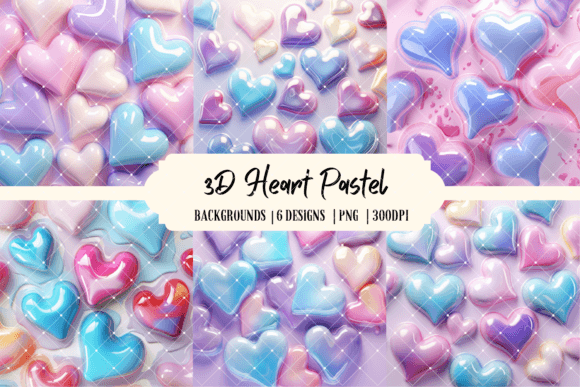
Selecting the right visual assets for Valentine’s Day crafts requires balancing aesthetic appeal with technical suitability. While flat vector art has long been a staple for greeting cards and simple prints, the rise of 3D Heart Pastel Backgrounds represents a shift toward more tactile, dimensional digital design. These assets distinguish themselves through simulated depth, soft lighting effects, and a color palette that avoids the harsh saturation often associated with traditional holiday graphics. For creators comparing options for sublimation, apparel, or paper crafts, understanding the specific utility of these 12x12 inch high-resolution files is essential for making an informed purchasing decision.
Distinguishing Features of 3D Rendered Pastel Assets
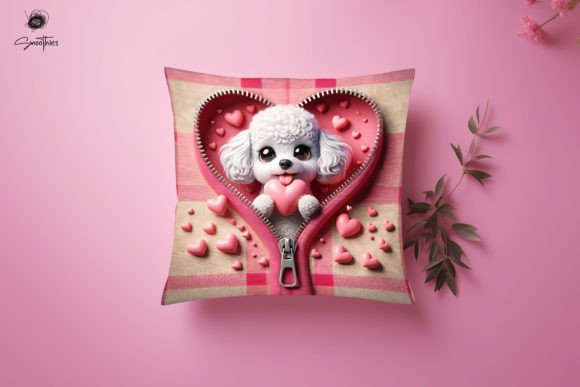
The primary differentiator of 3D Heart Pastel Backgrounds Valentines designs is the rendering technique. Unlike standard clipart which relies on solid colors and outlines, these backgrounds utilize shading, shadows, and highlights to create the illusion of physical volume. This distinction matters significantly when evaluating how a design will translate to physical media. On a matte greeting card, a flat red heart may appear dull, whereas a 3D rendered pastel heart retains visual interest through tonal variation even without glossy finishes.
The pastel color grading also serves a functional purpose beyond aesthetics. High-saturation reds and pinks can be problematic in sublimation printing, sometimes resulting in bleeding or overly dark transfers. Pastel tones generally offer a wider margin for error during the heat press process, maintaining clarity and detail. When comparing this style to vibrant neon or classic crimson alternatives, the pastel 3D approach offers a softer, more modern versatility that appeals to adult demographics seeking sophisticated rather than juvenile Valentine’s aesthetics.
Technical Specifications and Print Suitability
For any digital asset intended for physical production, resolution is the non-negotiable metric. The 3D Heart Pastel Backgrounds discussed here are provided at 3600 x 3600 pixels with a density of 300 DPI. This specification is critical for users weighing this option against lower-resolution web graphics or AI-generated images that may lack proper print formatting.
- Resolution Adequacy: At 300 DPI, a 3600px file yields a crisp 12x12 inch print. This is the industry standard for professional-quality output. Users comparing this to 72 DPI screen graphics should note that upscaling low-res files typically results in pixelation or blurriness, particularly in the smooth gradient areas common to 3D renders.
- Format Flexibility: The inclusion of individual PNG files ensures transparency support where applicable, though background files are typically opaque. PNG is preferred over JPEG for crafting because it uses lossless compression, preserving the sharp edges and subtle gradients of the 3D render without introducing artifacting.
- Scalability Considerations: While 12x12 inches is ideal for scrapbooking and square throw pillows, users needing larger formats (such as full-size t-shirt fronts) must evaluate raster limitations. Unlike SVG vectors, these PNGs cannot be scaled up infinitely. However, they can be scaled down without quality loss, making them excellent for mug wraps, coasters, and card fronts.
Comparing Digital Downloads to Physical Paper and Vectors
When sourcing Valentine’s materials, creators often choose between three categories: pre-printed patterned paper, scalable vector graphics (SVG), and high-resolution raster backgrounds like these 3D pastels. Each serves different project needs.
Pre-printed paper offers immediate tactile satisfaction but lacks customization. You cannot alter the color balance or remove elements to fit a specific quote or photo overlay. In contrast, 3D Heart Pastel Backgrounds Valentines files provide complete compositional control. You can adjust opacity, add personalized text, or combine multiple layers digitally before printing, achieving a custom look that pre-made paper cannot match.
Conversely, SVG vectors are superior for cutting machines (like Cricut or Silhouette) where distinct paths are required. However, vectors struggle to replicate the complex lighting and organic textures of 3D renders. If your project involves vinyl layering, vectors are the better choice. But if your goal is a photorealistic or clay-render aesthetic for sublimation mugs or DTG (Direct-to-Garment) printing, the raster-based 3D pastel background provides a richness that mathematical vector curves simply cannot emulate. The tradeoff is editability versus visual complexity; choose based on whether you need to cut shapes or print textures.
Application-Specific Decision Factors
Determining whether this specific 6-file bundle is the right investment depends heavily on your intended application. The 12x12 inch dimension is a deliberate constraint that favors certain crafts over others.
Ideal Use Cases:
- Sublimation Mugs and Tumblers: The square aspect ratio fits standard mug presses well when adapted. The pastel palette reduces the risk of color shifting on ceramic coatings.
- Greeting Cards: 12x12 allows for multiple card fronts per sheet or full-coverage backgrounds for standard A2 or 5x7 cards with ample bleed room.
- Digital Scrapbooking: The resolution is perfect for tablet-based journaling apps where zoom capability is necessary to see texture details.
Limitations to Consider:
If you primarily create large-format wall art or banners, a 12x12 inch raster file may require tiling or acceptance of lower DPI at larger sizes. Additionally, because these are pre-rendered 3D scenes, you cannot change the angle of the hearts or the direction of the light source. Users requiring specific spatial arrangements might find pre-composed backgrounds restrictive compared to building their own 3D scenes or using modular clipart. Evaluate whether the convenience of a finished composition outweighs the loss of positional control.
Managing Digital Files and Color Expectations
A practical consideration often overlooked during comparison is file management and output consistency. These assets are delivered in a .ZIP archive containing six individual PNGs. Users unfamiliar with compressed files on PC or Mac environments should verify their ability to extract content before purchase. Unlike cloud-streamed assets, local storage is required, ensuring offline access for craft software like Photoshop, Canva, or Procreate.
Color variance is another critical evaluation point. Pastel colors are particularly sensitive to monitor calibration and printer profiles. A soft blush pink on an RGB screen may print as a muddy beige on an uncalibrated inkjet. When comparing digital downloads to physical products, remember that digital files place color management responsibility on the user. It is advisable to print test swatches on your specific substrate (e.g., poly-coated mug vs. cotton cardstock) before committing to a full production run. This step mitigates the risk inherent in digital-only purchases where no physical sample is shipped.
Evaluating Value and Creative Fit
Ultimately, choosing 3D Heart Pastel Backgrounds Valentines resources comes down to aligning technical specs with creative goals. For adults aged 20–50 engaging in seasonal crafting, the value proposition lies in the intersection of trend-aware aesthetics and production-ready specifications. The 300 DPI resolution ensures professional results, while the pastel 3D style offers a contemporary alternative to dated holiday tropes.
However, buyers should remain objective about their workflow. If your projects demand infinite scalability or precise cutting paths, explore vector alternatives. If you require guaranteed color matching without profiling work, consider physical papers. But for those prioritizing textured, dimensional visuals for sublimation and print-on-demand applications within the 12x12 inch range, these high-resolution PNGs represent a balanced, versatile solution. By weighing these factors against your specific equipment and project requirements, you can select resources that enhance rather than complicate your creative process.