Mastering the Santa Claus Break Through 3D Mug Wrap: A Complete Guide to Festive Sublimation
The holiday season is synonymous with tradition, warmth, and personalized gifting. In the world of custom merchandise and print-on-demand businesses, few items capture the spirit of Christmas quite like a themed ceramic mug. Among the myriad of designs available to creators today, the Santa Claus Break Through 3D Mug Wrap has emerged as a standout favorite for its dynamic visual appeal and professional finish. Whether you are referring to the specific "Santa Claus Break Through 3D Mug Wrap 8" variation or the broader collection, understanding how to utilize these digital assets effectively is key to producing high-quality, retail-ready products.
This guide explores the technical specifications, creative applications, and practical significance of this design file. We will move beyond simple product descriptions to understand why this specific format matters in modern sublimation printing, how it fits into a creative business workflow, and how to avoid common pitfalls when working with high-resolution PNG wraps.
Understanding the 3D Mug Wrap Concept
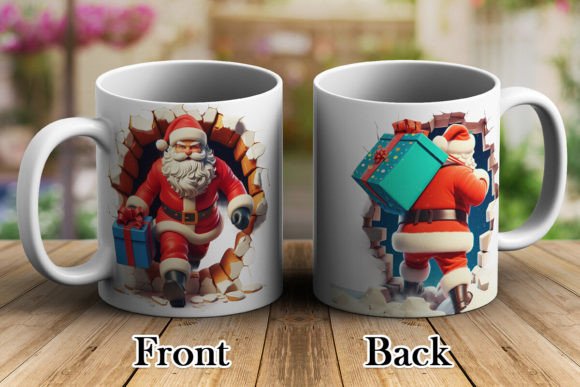
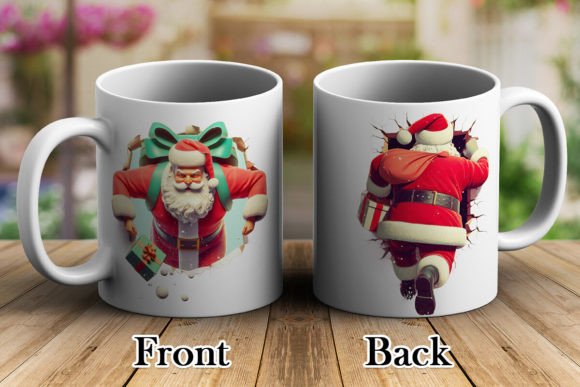
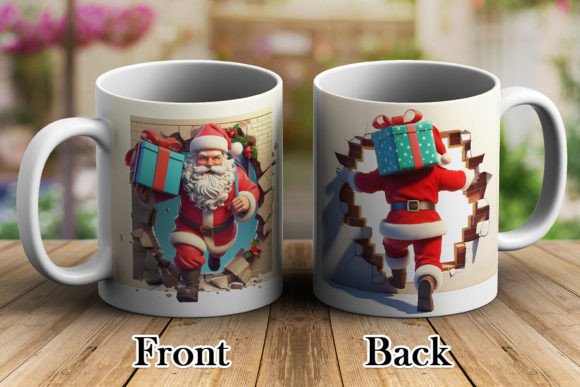
To fully appreciate the value of the Santa Claus Break Through design, one must first understand what distinguishes a "3D wrap" from a standard flat image. In traditional graphic design, an image is two-dimensional. However, in sublimation printing, a 3D wrap is engineered specifically to account for the cylindrical geometry of a mug. The term "break through" refers to a specific artistic style where the subject—in this case, Santa Claus—appears to be bursting out of a frame or interacting with the boundaries of the design space. This creates an optical illusion of depth when the flat paper is wrapped around a curved surface.
The significance of this design choice cannot be overstated for sellers and crafters. A flat image of Santa placed on a mug can sometimes look static or pasted on. A break-through 3D wrap utilizes perspective and shading that aligns with the curve of the vessel, making the final physical product look immersive and professionally manufactured rather than homemade. This distinction is often what separates hobbyist crafts from premium boutique merchandise.
Technical Specifications: Why Size and Resolution Matter
When downloading the Santa Claus Break Through 3D Mug Wrap 8 or similar files, you are typically provided with a specific set of parameters designed for industry-standard equipment. The download includes 1 PNG File with Size 9.75 in x 4.75 in at 300 DPI Resolution. For beginners, these numbers might seem arbitrary, but they are the foundation of print quality.
The Importance of 300 DPI
DPI stands for Dots Per Inch. In the realm of digital screens, 72 DPI is often sufficient. However, for physical printing, especially on glossy ceramic surfaces where ink spreads slightly, 300 DPI is the non-negotiable gold standard. Printing a low-resolution file on a mug results in pixelation, blurriness, and a loss of fine details in Santa’s beard or suit texture. By providing a 300 DPI source file, the designer ensures that the crispness seen on the computer monitor translates faithfully to the physical tote bag or mug.
Dimensions and Aspect Ratio
The dimensions of 9.75 inches by 4.75 inches are tailored to fit standard 11oz and 15oz sublimation mugs. This size covers the printable area without excessive waste. However, the note that the file is "easy to resize with different software" highlights a crucial aspect of modern digital crafting. Not all mugs are identical; some have tapered sides, while others are wider or narrower. Having a high-resolution master file allows users to scale down for smaller camp mugs or adjust the aspect ratio slightly for tumblers without degrading image integrity. Because PNG is a raster format, maintaining the original high resolution during resizing is essential to prevent artifacting.
Practical Applications Beyond the Coffee Cup
While the primary intent of the Santa Claus Break Through 3D Mug Wrap is clearly indicated by its name, the versatility of this asset extends far beyond drinkware. Understanding this versatility is vital for maximizing return on investment for digital assets.
- Tote Bags: The rectangular aspect ratio of the wrap translates beautifully to canvas tote bags. The "break through" effect works exceptionally well on fabric, creating a focal point that draws the eye. Unlike mugs, bags offer a flat canvas where the 3D effect serves as a stylistic pop-art element.
- Garden Flags and Banners: With minor adjustments, the vibrant colors and bold lines typical of Santa break-through designs are perfect for outdoor holiday decor. The high contrast ensures visibility from a distance.
- Apparel and Textiles: While designed for mugs, the central artwork can be isolated or adapted for t-shirts and sweatshirts. The 300 DPI resolution supports large-format printing on garments without losing clarity.
- Placemats and Coasters: For a cohesive holiday table setting, the color palette and character styling of the mug wrap can be repurposed for dining accessories, creating a unified theme for customers or personal use.
Integrating Digital Assets into Modern Creative Workflows
In today's creator economy, efficiency is just as important as artistry. The availability of pre-sized, high-quality wraps like the Santa Claus Break Through series addresses a significant pain point: the time cost of design. Creating a seamless, perspective-correct 3D illustration from scratch requires advanced digital painting skills and hours of labor. By utilizing a ready-to-print wrap, entrepreneurs can focus on production, marketing, and customer service.
This fits into the broader trend of Print-on-Demand (POD) and small-batch manufacturing. Small business owners can test market demand for specific Santa variations (like version 8) without investing in expensive inventory. If the "Break Through 8" design sells well, they know the aesthetic resonates with their audience. Furthermore, because the file is digital and easy to resize, it integrates seamlessly with RIP (Raster Image Processor) software used in professional print shops, as well as consumer-grade tools like Canva, Photoshop, or GIMP.
Common Misunderstandings and Best Practices
Despite the user-friendly nature of these files, there are common assumptions that can lead to disappointing results. Addressing these misunderstandings helps build a stronger foundation for success.
- Misunderstanding: "PNG Means Transparent Background."
It is vital to clarify that while PNG supports transparency, many 3D mug wraps are full-bleed designs intended to cover the entire white surface of a mug. Do not assume the background is transparent unless specified. If you intend to place Santa on a colored mug, you may need to mask out the background manually using editing software. - Misunderstanding: "Resize Without Consequence."
While the file is easy to resize, stretching a raster image beyond its native dimensions will degrade quality. Always check the effective DPI after resizing. If you stretch a 9.75-inch image to 12 inches, your resolution drops below 300 DPI. It is safer to scale down than to scale up. - Misunderstanding: "Color Accuracy is Guaranteed."
Digital files use RGB color space, while sublimation printers use CMYK inks. Colors on screen will always appear more vibrant than on paper. Experienced users understand the necessity of color profiling and test prints. Always print a test sheet before committing to a final product to ensure Santa’s red suit doesn't turn maroon or orange. - Misunderstanding: "One Size Fits All Mugs."
Even though 9.75" x 4.75" is standard, mug manufacturers vary. Always measure your specific blank physically. A gap at the seam or overlapping edges can ruin the 3D illusion. Use the resize feature to tailor the wrap to your exact hardware.
Educational Value and Skill Building
Using resources like the Santa Claus Break Through 3D Mug Wrap is also an educational opportunity. For aspiring designers, analyzing these files provides insight into professional composition. How did the artist handle the seam? Where is the safe zone for text? How is lighting simulated to create the 3D effect? Deconstructing these commercial-grade assets accelerates learning.
For business students and entrepreneurs, these files serve as case studies in product development. They represent the intersection of art, technology, and commerce. Understanding the supply chain—from digital download to physical sublimation to end-consumer satisfaction—provides real-world context to theoretical business concepts. The ease of access to such high-quality tools democratizes entry into the customized goods market, allowing individuals to learn through doing.
Conclusion
The Santa Claus Break Through 3D Mug Wrap 8 is more than just a festive graphic; it is a precision tool for modern creators. With its optimal 9.75 in x 4.75 in sizing and crisp 300 DPI resolution, it bridges the gap between digital convenience and physical quality. Whether you are printing a single gift for a loved one or fulfilling orders for a holiday rush, understanding the technical and creative nuances of this file ensures superior results.
By respecting the resolution requirements, exploring versatile applications beyond mugs, and avoiding common printing misconceptions, users can unlock the full potential of this design. In an era where personalized, tangible goods hold increasing emotional value, mastering these digital assets allows us to bring a little more magic, professionalism, and joy into the holiday season.