Evaluating the 3D Cat in Flowers Pad Design for Sublimation Projects
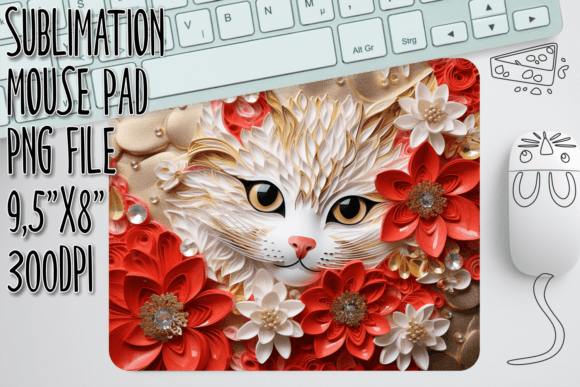
Selecting the right digital asset for sublimation printing requires a clear understanding of file specifications, artistic style, and technical limitations. The 3D Cat in Flowers Pad Design represents a specific category of digital art tailored for heat transfer applications rather than vector-based crafting. For makers and small business owners comparing resources, distinguishing between high-resolution raster art and scalable vector graphics is the first step in determining if this design aligns with current production needs. This digital download provides a specialized aesthetic that differs significantly from standard clipart or cut files, offering distinct advantages for certain substrates while presenting limitations for others.
Defining the Asset: Raster Art vs. Vector Cut Files
The most critical distinction when evaluating the 3D Cat in Flowers Pad Design is its file format. This product is delivered exclusively as a PNG file and is not an SVG. In the digital crafting ecosystem, confusion between these two formats often leads to purchasing errors. SVG (Scalable Vector Graphics) files are mathematical paths used primarily with cutting machines like Cricut or Silhouette to create vinyl decals, paper cuts, or stencils. They possess infinite scalability without quality loss but lack complex shading and photorealistic textures.
In contrast, the 3D Cat in Flowers Pad Design is a raster image optimized for sublimation. Sublimation relies on dye infusion into polymer coatings or polyester fibers, a process that demands high pixel density rather than vector paths. Because this design focuses on depth, lighting, and texture to achieve a three-dimensional appearance, it cannot be converted into a functional cut file. Makers seeking a design to layer with adhesive vinyl or use as a stencil template should look elsewhere. However, for those specifically producing printed merchandise where color vibrancy and detail are paramount, this raster format is the industry standard.
Technical Specifications and Print Quality Assessment
When comparing digital downloads for commercial or hobbyist use, resolution is the primary metric of value. Low-resolution images result in pixelated prints that degrade brand perception or personal satisfaction. The 3D Cat in Flowers Pad Design addresses this through specific technical parameters:
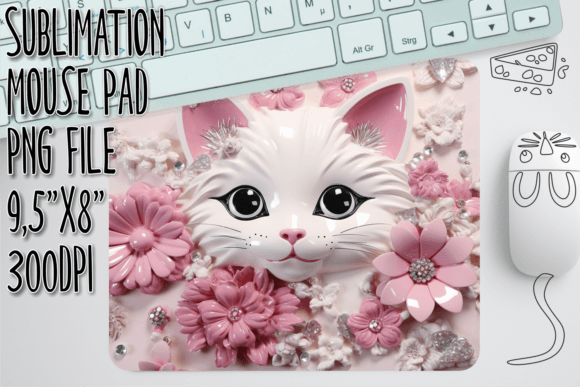
- Resolution: The file is rendered at 300 DPI (dots per inch). This is the minimum threshold for professional-grade printing. Many free or low-cost alternatives found online are 72 or 96 DPI, which appear crisp on screens but fail during physical reproduction.
- Dimensions: Measuring 9.5 x 8 inches, the canvas size accommodates a wide range of standard blanks without requiring immediate upscaling.
- Format: A single PNG file with transparency support allows for seamless integration onto colored backgrounds or patterned substrates without removing white boxes manually.
While the 9.5 x 8-inch footprint is versatile, users must understand the physics of raster resizing. Unlike vectors, enlarging a PNG beyond its native dimensions reduces effective DPI. If a user stretches this design to cover a 15-inch blanket, the resolution drops below 300 DPI, potentially introducing softness. Conversely, scaling down for items like coasters or keychains increases effective density, resulting in exceptionally sharp output. Evaluators should measure their intended blank before purchase to ensure the native dimensions provide adequate coverage without compromising clarity.
Aesthetic Comparison: 3D Render vs. Flat Illustration
Visual style dictates market fit. The "3D" designation in the 3D Cat in Flowers Pad Design implies simulated depth, volumetric lighting, and realistic texturing. When comparing this against flat vector illustrations or watercolor scans, several tradeoffs emerge.
Strengths of the 3D Style
The dimensional quality creates a focal point that flat designs often lack. On curved surfaces like mugs or tumblers, the simulated shadows and highlights can complement the physical curvature of the object, enhancing the illusion of depth. This style tends to perform well in niches favoring whimsy, fantasy, or modern digital art. The floral elements provide organic softness that balances the synthetic nature of 3D rendering, making it suitable for gifts, pet-themed merchandise, and seasonal decor.
Limitations and Considerations
However, 3D renders do not suit every application. Flat, bold graphics typically outperform detailed 3D art on dark textiles because sublimation cannot print white ink; the design relies entirely on the substrate's base color. Intricate shadows in a 3D render may become muddy on heather gray or colored fabrics. Additionally, minimalist or retro aesthetics currently trending in apparel may clash with the high-detail nature of this design. Buyers curating a cohesive collection should assess whether this level of visual complexity harmonizes with their existing inventory or if a simpler line-art alternative would offer better versatility.
Application Suitability and Substrate Matching
Determining when to utilize the 3D Cat in Flowers Pad Design versus alternative resources depends heavily on the end product. Not all sublimation blanks interact with detailed raster art equally.
Ideal Use Cases:
- Ceramic and Coated Metals: White mugs, aluminum panels, and ceramic tiles offer the smoothest surface for capturing fine details. The 300 DPI resolution shines here, preserving the delicate texture of the flowers and the fur rendering of the cat.
- Light-Colored Polyester Textiles: White or cream polyester shirts, pillow covers, and tote bags allow the full color gamut to display accurately. The 9.5 x 8 size is particularly well-suited for standard adult shirt fronts or throw pillow centers.
- Puzzle and Desk Mats: These flat, rigid substrates benefit from the immersive quality of 3D art, turning a functional item into a decorative piece.
Situations Requiring Alternatives:
- Vinyl Decals: As noted, this is not a cut file. Users needing window clings or car decals require SVG formats.
- Dark Garments: Without white ink capability, this design will lose contrast on black or navy fabrics. Heat Transfer Vinyl (HTV) or DTF (Direct to Film) transfers are superior alternatives for dark apparel.
- Oversized Bedding: While usable, the 9.5 x 8 dimension may require tiling or significant upscaling for queen/king duvets, risking quality loss. Dedicated large-format patterns may be more efficient.
Evaluating Digital Downloads Against Physical Transfers
Makers often weigh the decision between purchasing a digital file like the 3D Cat in Flowers Pad Design versus buying pre-printed transfers. Understanding this economic and operational tradeoff is essential for resource planning.
Digital downloads offer maximum flexibility and lowest per-unit cost. Once acquired, the file can be printed indefinitely, allowing for prototyping, color correction, and customization without recurring fees. This autonomy is vital for businesses testing new designs or individuals wanting precise control over placement and sizing. The ability to adjust the 9.5 x 8 canvas digitally means one file serves multiple product lines.
Conversely, pre-printed transfers eliminate the need for sublimation equipment, ink management, and color profiling. For someone producing a single item or lacking professional printing infrastructure, a ready-to-press transfer removes technical barriers. However, they lack editability and carry higher long-term costs. The 3D Cat in Flowers Pad Design is strategically superior for producers with established workflows who prioritize margin control and creative freedom over convenience.
Making an Informed Selection Decision
The decision to acquire the 3D Cat in Flowers Pad Design should be based on a realistic assessment of project requirements rather than impulse. It is a specialized tool within the broader maker toolkit. Prospective users should verify three key factors before proceeding:
- Equipment Compatibility: Confirm access to a sublimation printer and heat press. This file has no utility for standard inkjet printing or cutting machine projects.
- Substrate Alignment: Ensure intended blanks are light-colored and polymer-coated or polyester-rich to support the design’s color profile and detail level.
- Style Cohesion: Assess whether the 3D aesthetic complements existing product lines or fills a specific gap in current offerings.
For creators meeting these criteria, this high-resolution PNG offers a reliable foundation for unique, detailed sublimation products. For those requiring vector scalability, dark fabric compatibility, or non-sublimation applications, exploring alternative file types or printing methods will yield better results. By matching the asset’s inherent properties to specific production goals, makers can avoid common pitfalls and maximize the value of their digital resource investments. Ultimately, the 3D Cat in Flowers Pad Design serves as a high-quality component for sublimation-focused workflows, distinguished by its resolution and dimensional artistry within its specific technical boundaries.