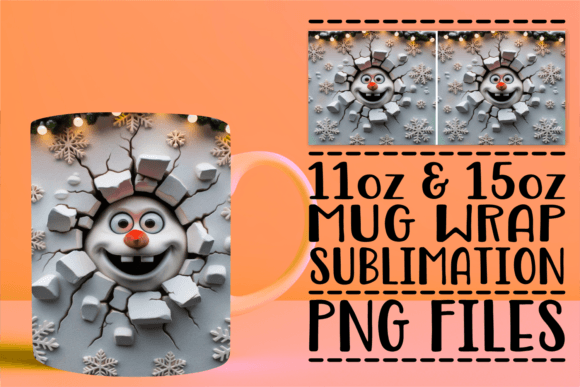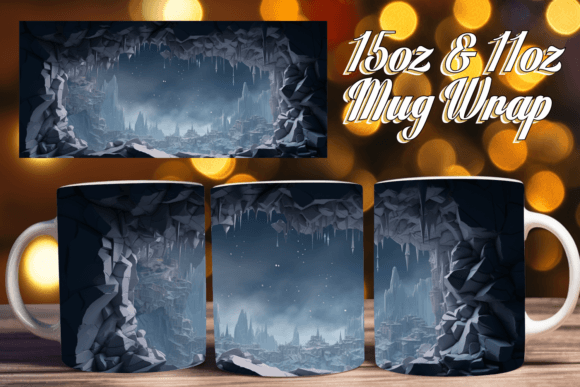
Elevating Sublimation Portfolios with 3D Hole in Wall Winter Fantasy Designs
The custom merchandise landscape is undergoing a significant transformation, driven by consumer demand for products that offer more than just utility. In an era where personalization is the baseline expectation, creators and entrepreneurs must seek visual assets that provide depth, narrative, and tactile illusion. This shift has brought optical art and dimensional design to the forefront of the sublimation industry. Among the most compelling trends emerging in this space is the 3D Hole in Wall Winter Fantasy aesthetic. This specific design style bridges the gap between digital artistry and physical product perception, turning standard drinkware into conversation pieces.
For professionals, freelancers, and business owners operating in the print-on-demand or custom gift sector, understanding the strategic value of such designs is crucial. It is not merely about applying a pretty picture to a mug; it is about leveraging high-resolution visual psychology to increase perceived value. However, integrating these complex graphics requires technical precision. To effectively utilize this file, it is essential to have a strong grasp of the concept of sublimation. Before making a purchase, please ensure that you have the required software and equipment at your disposal, as I won’t be able to offer guidance on the processes involved. My support is exclusively available for addressing any issues specifically related to my files.
The Psychology of Dimensional Design in Consumer Goods
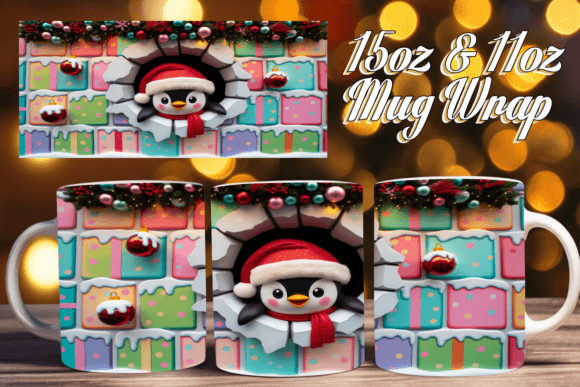
The "Hole in Wall" concept relies on trompe-l'œil, a French term meaning "deceive the eye." When applied to cylindrical surfaces like mugs, this technique creates a powerful cognitive disruption. Instead of seeing a flat image wrapped around a curve, the viewer perceives a window, a portal, or a recessed space. When combined with a Winter Fantasy theme, this effect evokes feelings of coziness, nostalgia, and immersion. The viewer feels as though they are looking through a frosted pane or a rustic opening into a serene winter landscape.
This psychological engagement is what separates premium products from generic commodities. In a saturated market, attention is the scarcest resource. A standard snowflake pattern may be aesthetically pleasing, but a 3D rendering that suggests physical depth demands a second look. For marketers and creators, this translates directly to higher click-through rates on e-commerce platforms and increased dwell time at physical craft fairs. The design does the heavy lifting of storytelling without requiring additional copy or explanation.
Aligning with Seasonal Market Trends
Winter remains one of the most lucrative seasons for the sublimation industry, yet it is also the most competitive. Consumers are inundated with holiday motifs year after year. The 3D Hole in Wall Winter Fantasy offers a sophisticated alternative to traditional clip art. It aligns with the broader "cottagecore" and "hygge" lifestyle trends that emphasize comfort, warmth, and artisanal quality. By offering a design that feels architectural rather than purely illustrative, sellers can tap into a demographic that values home decor aesthetics even in their functional items.
Furthermore, this style supports the growing preference for gender-neutral and ageless gifting. While cartoonish winter characters appeal to children, and ornate Victorian patterns appeal to traditionalists, a realistic 3D fantasy scene occupies a versatile middle ground. It is suitable for corporate gifts, teacher appreciation, family reunions, and high-end retail, broadening the total addressable market for any single SKU.
Technical Excellence as a Business Differentiator
Creativity captures attention, but technical execution secures the sale and prevents returns. Optical illusions are unforgiving; if the resolution is low or the alignment is off, the 3D effect collapses, leaving behind a blurry or distorted image. This is why asset quality is non-negotiable for professional results. The included PNG templates are high-resolution, 300 dpi files that can be easily customized to meet your requirements. This specification ensures that fine details—such as the texture of brick, the sparkle of ice, or the grain of wood—remain crisp even when wrapped around a curved surface.
High DPI is particularly critical for 3D effects because the illusion depends on sharp contrast and precise shading. When printing on ceramic, the ink spreads slightly during the heat press process. Starting with a 300 DPI source file provides the necessary data density to compensate for this natural diffusion, resulting in a final product that looks professionally manufactured rather than homemade.
Versatility Across Product Lines
Efficient workflows are the backbone of profitable creative businesses. Sourcing assets that serve multiple purposes reduces overhead and streamlines production. This collection is designed with scalability in mind:
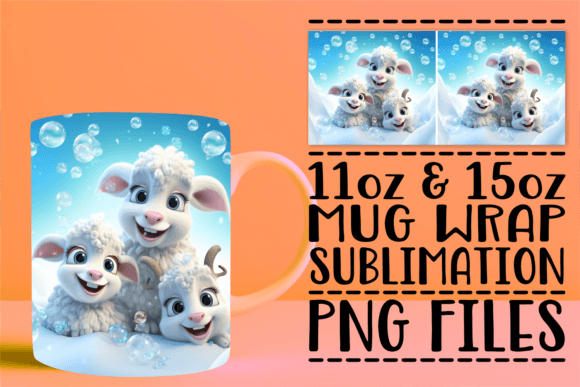
- Dual Size Compatibility: Sized to fit both 11oz and 15oz sublimation mug wraps, allowing sellers to offer size variants without redesigning or resizing manually.
- Cross-Platform Application: Suitable for a wide range of sublimation projects beyond mugs, including tumblers, coasters, and slate plaques, maximizing the ROI of a single asset.
- Editability: As PNG files, they integrate seamlessly with major design software, enabling creators to add personalized text, names, or logos while maintaining the integrity of the background art.
This versatility addresses a changing need in the industry: the move away from single-use assets toward modular design systems. Entrepreneurs no longer have the luxury of buying a new graphic for every minor variation. They require foundational art that can be adapted quickly to fulfill custom orders during peak seasonal rushes.
Navigating the Professional Sublimation Workflow
While the artistic potential of the 3D Hole in Wall Winter Fantasy is vast, realizing it requires a disciplined approach to production. The transition from screen to substrate involves variables that digital designers often overlook. Color profiles, pressure settings, temperature curves, and wrap tension all influence how a 3D image ultimately appears. A shadow that looks perfect on a monitor might print too dark, destroying the illusion of depth. Conversely, insufficient contrast can make the "hole" look flat.
This reality underscores the importance of self-sufficiency in technical processes. Creators must view digital assets as raw materials rather than finished solutions. Testing is mandatory. Professionals should always run test prints on scrap material to calibrate their specific equipment before committing to client orders. Understanding how your specific printer and heat press interact with 300 DPI PNGs is part of the craft.
Defining Support Boundaries for Sustainable Business
In the digital asset marketplace, clarity regarding support protects both the creator and the buyer. Transparency builds trust and sets appropriate expectations. As stated previously, my support is exclusively available for addressing any issues specifically related to my files. If a download is corrupted, a layer is missing, or the resolution does not match the description, immediate assistance will be provided. Should you encounter any challenges, please don’t hesitate to get in touch. I’m here to assist and will happily provide support. 🙂
However, troubleshooting printer mechanics, color management, or software tutorials falls outside this scope. This distinction is vital for maintaining sustainable operations. It ensures that support resources remain focused on product quality rather than general education. Buyers are encouraged to leverage community forums, manufacturer guides, and educational content for process-related inquiries. This division of labor allows the asset creator to maintain high standards for the files themselves, ensuring that when you do open the document, it is exactly as promised.
Future-Proofing Your Creative Offerings
The sublimation industry is maturing. As barriers to entry lower, differentiation becomes the primary driver of success. Investing in high-concept visuals like 3D fantasy art is a forward-looking strategy. It signals to customers that a brand is current, detail-oriented, and invested in quality. Moreover, as AI-generated imagery floods the market with generic content, curated, high-resolution, purpose-built templates gain value. Human curation ensures that the 3D perspective actually works on a cylinder, something automated tools frequently fail to account for.
Additionally, these designs cater to the experiential economy. People are buying mugs not just to hold coffee, but to curate a morning ritual or express an identity. A 3D Hole in Wall Winter Fantasy mug contributes to that ritual. It transforms a mundane object into a momentary escape. For sellers, this emotional connection justifies premium pricing and fosters brand loyalty.
Maximizing Asset Value Through Customization
To truly capitalize on these files, creators should think beyond the default layout. Consider how the 3D element interacts with personalization. Placing a name within the "depth" of the hole makes the text feel embedded in the scene rather than floating on top. Using the negative space of the wall for messaging maintains the immersive quality. These subtle design choices demonstrate expertise and elevate the final product above competitors who simply slap text over the center of an image.
Thank you for your purchase, and I hope you have an amazing experience. By combining technical readiness with high-quality, trend-responsive assets, you position your business to thrive in a dynamic market. The tools are now in your hands to create something exceptional.